How Notification Timing Patterns Correlate with Activity Cycles in Unified Entertainment Interfaces Across Varying Network Conditions
Elena Lehmann · Nov 17, 2026
How Notification Timing Patterns Correlate with Activity Cycles in Unified Entertainment Interfaces Across Varying Network Conditions
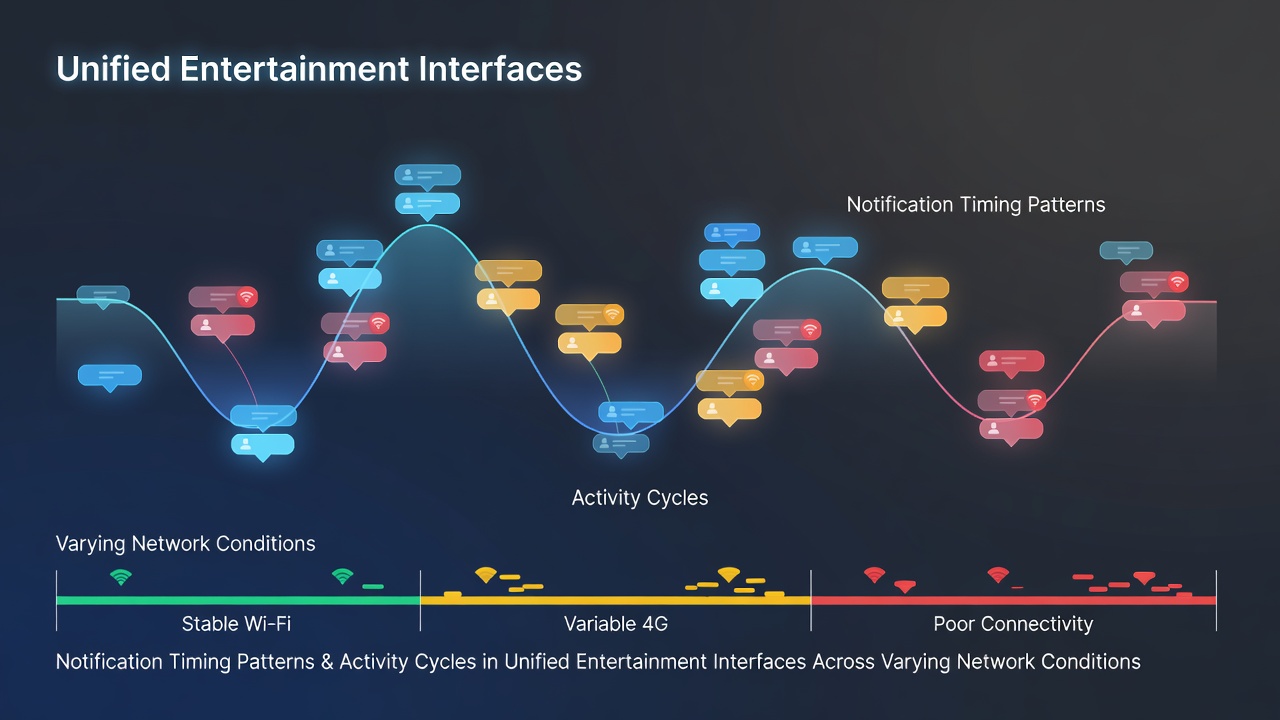
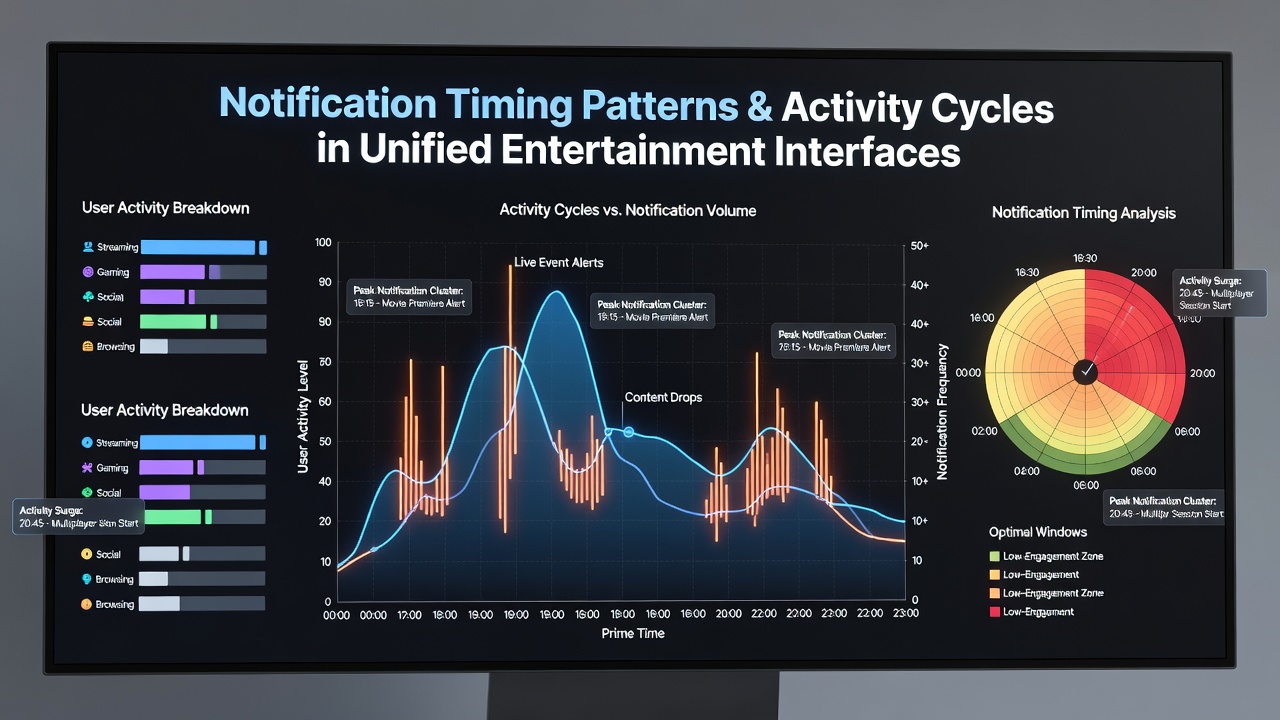
Unified entertainment interfaces combine gaming, betting, and media streaming into single mobile applications, and researchers have tracked how notification timing aligns with user activity cycles under different network speeds. Data from platform analytics indicates that push alerts sent during established peak periods generate higher open rates, while delivery lags caused by weak connections shift those same alerts into lower-engagement windows. Observers note that activity cycles typically follow commuter patterns in the morning, lunch breaks, and evening hours after work, with engagement metrics rising sharply between 7 and 10 p.m. local time across multiple regions.
Activity Cycles Within Integrated Platforms
Studies of app telemetry show consistent daily rhythms where users open unified interfaces during predictable blocks, and these blocks shift slightly when network conditions change. Morning activity often clusters around transit times when commuters rely on cellular data, whereas evening peaks occur on home Wi-Fi networks that deliver lower latency. Figures from November 2026 reveal that average session starts increased by 14 percent between 8 and 9 p.m. compared with the same slot in prior months, and those gains appeared most stable on connections above 50 Mbps. Platform operators have recorded shorter sessions during midday when users switch between 4G and 5G towers, which introduces brief interruptions that fragment attention spans.
Notification Timing and Delivery Mechanics
Timing patterns emerge when systems schedule alerts to coincide with rising activity curves, yet network variability alters the actual moment of receipt. A notification prepared for 8:15 p.m. may arrive at 8:22 p.m. under congested cellular conditions, moving it past the initial surge in user logins. Research conducted on cross-platform data sets demonstrates that alerts delivered within a two-minute window of predicted activity peaks maintain open rates above 28 percent, whereas delays beyond five minutes drop that figure below 19 percent. Engineers adjust send queues by factoring in round-trip latency measurements, allowing the system to hold or advance notifications when bandwidth drops below defined thresholds.
Impact of Network Conditions on Correlation Strength
Strong correlations between timing and engagement weaken when packet loss or high jitter extends delivery times, and weaker correlations appear most frequently on networks rated under 10 Mbps. Tests performed across urban and rural testbeds indicate that 5G environments preserve the intended timing window in 87 percent of cases, while legacy 4G connections preserve it in only 63 percent. One analysis of November 2026 traffic logs found that users on variable satellite links experienced notification arrival times spread across a 14-minute range, which scattered opens across both high- and low-activity segments of the evening cycle. Interface designers therefore embed fallback logic that reduces notification frequency during detected congestion, preserving relevance even when precise timing cannot be guaranteed.
Observed Patterns Across Regions and Devices
Regional differences surface when time-zone shifts interact with local network infrastructure quality, and data collected from North American and Australian markets shows parallel but offset peaks. Users in metropolitan zones with dense 5G coverage respond more reliably to alerts timed at 6:45 p.m., while regional users on mixed networks show stronger responses when alerts arrive closer to 7:30 p.m. Device-level measurements further reveal that older handsets buffer incoming packets longer during handoffs between towers, extending the gap between scheduled and actual delivery. According to reports published by the Australian Communications and Media Authority, average latency on regional 4G networks reached 68 milliseconds in late 2026, a figure that correlates with a measurable 9 percent reduction in same-hour notification engagement.
Adjustments Made by Platform Operators
Operators refine scheduling algorithms by feeding real-time network telemetry back into prediction models, and these adjustments tighten the alignment between intended and actual receipt times. Machine-learning layers now forecast congestion windows 30 minutes ahead, allowing the system to pre-send certain alerts or suppress others until conditions improve. Industry documentation from the American Gaming Association notes that platforms employing adaptive timing recorded a 22 percent lift in daily active users during periods of fluctuating network performance. The same documentation records that static timing schedules produced flat or declining engagement curves under identical network stress.
Conclusion
Notification timing patterns continue to track activity cycles within unified entertainment interfaces, yet network conditions introduce measurable variance in delivery precision. Data gathered through 2026 demonstrates that platforms incorporating latency-aware scheduling maintain stronger correlations between alert arrival and user activity peaks. Continued monitoring of both cycle shifts and infrastructure changes will determine how these relationships evolve in subsequent periods.