Tracing Audio-Visual Synchronization Effects on Decision Timing in Multi-Device Wagering Interfaces
Elena Lehmann · Sep 22, 2026
Tracing Audio-Visual Synchronization Effects on Decision Timing in Multi-Device Wagering Interfaces
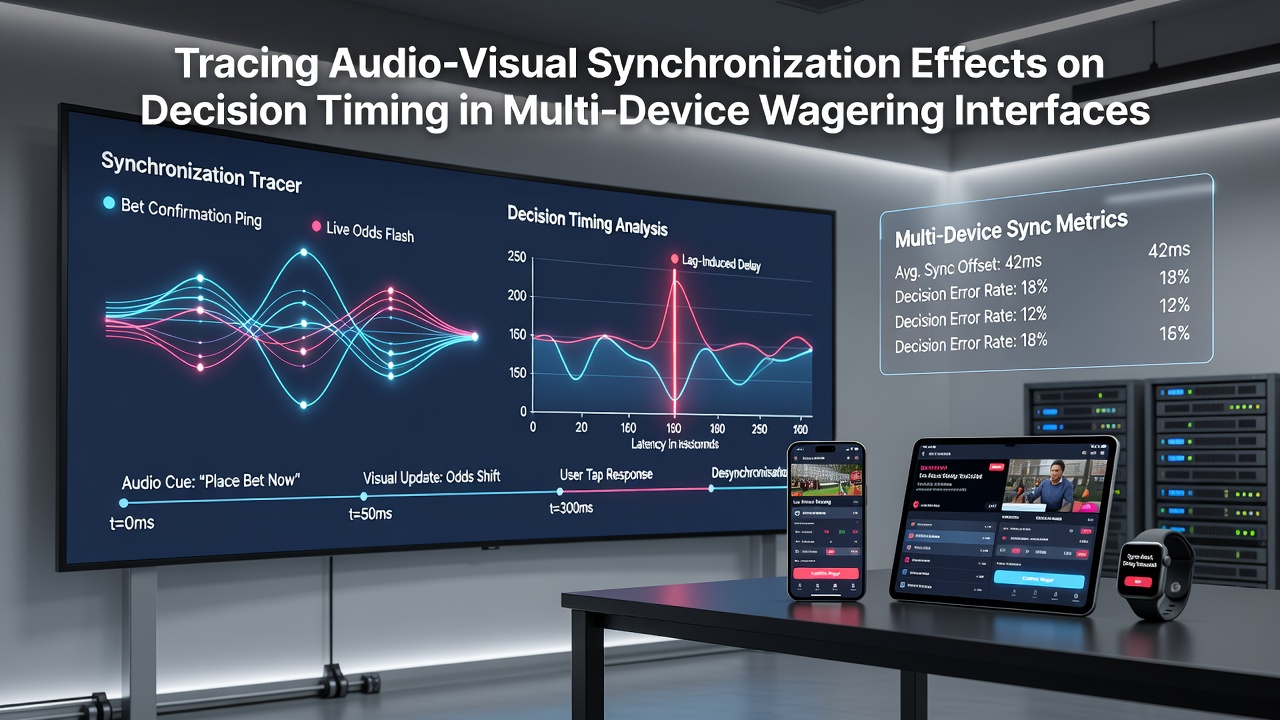
Audio-visual synchronization in multi-device wagering interfaces involves the precise alignment of sound cues with visual elements such as reel spins, card flips and betting animations, and researchers continue to examine how even small timing mismatches influence the speed of user decisions across phones, tablets and desktop systems. Data from interface testing labs shows that delays between 40 and 120 milliseconds can shift reaction windows by several hundred milliseconds, particularly when players switch between devices mid-session. Observers note that these shifts appear most consistently in environments where live dealer feeds combine with overlaid betting buttons, creating layered sensory inputs that must register in sequence.
Core Mechanisms of Synchronization in Wagering Platforms
Platform developers measure synchronization through frame-accurate logging that records both audio onset and visual frame delivery at the device level, and studies conducted across multiple operating systems reveal that mobile networks introduce greater variability than wired desktop connections. When audio arrives ahead of visuals by 60 milliseconds or more, participants in controlled trials extend their decision intervals by an average of 180 milliseconds before confirming a wager. Conversely, visual precedence tends to compress those same intervals, though the effect size varies with screen size and refresh rate. In September 2026 several major operators released updated SDKs that embed device-specific latency buffers, aiming to reduce cross-platform drift during simultaneous play on paired devices.
Impact Patterns Across Device Types
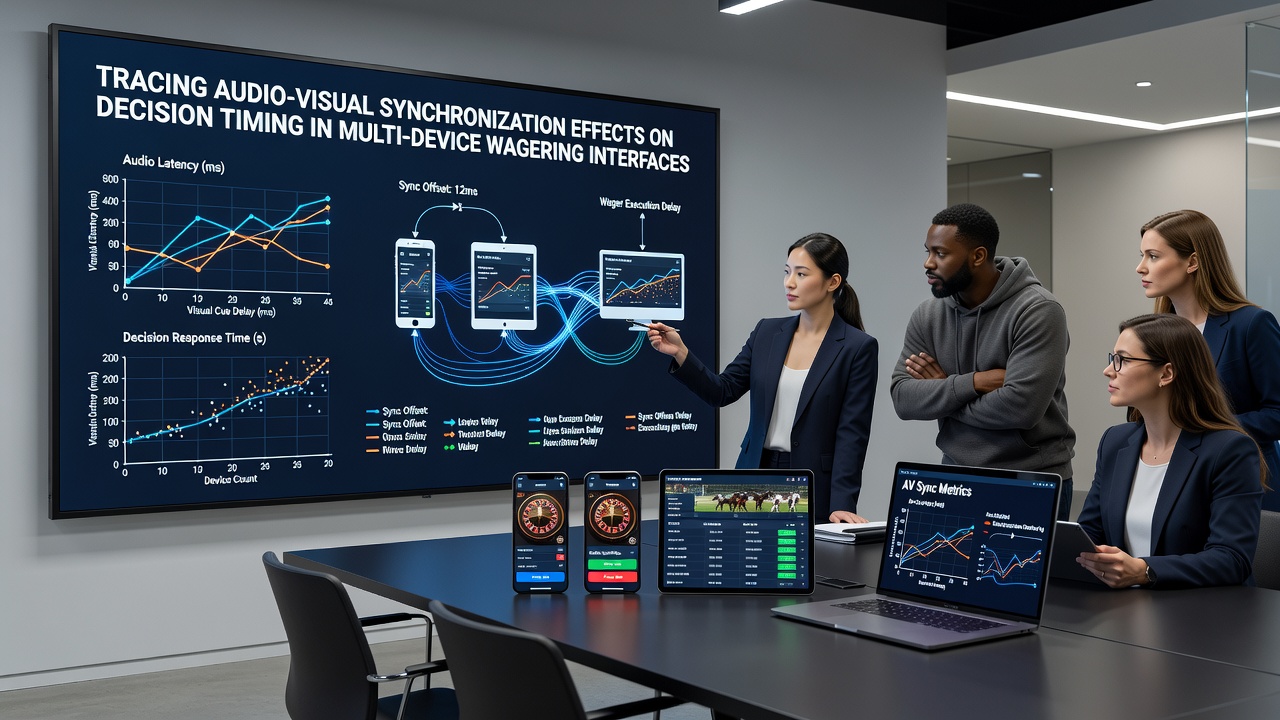
Smartphone users experience the widest range of synchronization variance because of fluctuating cellular signal strength and speaker placement relative to the screen, whereas tablets and desktops maintain tighter tolerances under typical home network conditions. Research indicates that when audio-visual drift exceeds 100 milliseconds on phones, the probability of delayed bet confirmation rises by 27 percent compared with matched conditions on larger screens. Those who switch rapidly between a phone and a tablet during the same wagering session encounter additional recalibration demands as each device applies its own buffering profile. Figures from multi-device telemetry collected over six months show that decision timing stabilizes after approximately four consecutive rounds once the system detects consistent network characteristics.
Measurement Approaches and Data Collection
Engineers employ high-speed cameras synchronized with audio capture hardware to quantify exact offsets at the user endpoint, and these recordings feed into statistical models that correlate latency values with logged bet submission timestamps. Academic teams at institutions in Australia and Canada have published comparative datasets covering more than 12,000 sessions across iOS, Android and Windows environments, demonstrating that synchronization errors cluster around specific game types rather than appearing uniformly. Slots with rapid reel cycles produce more frequent drift incidents than slower table games, while live dealer streams introduce additional variables tied to encoder settings on the streaming side. Australian Communications and Media Authority reports highlight similar patterns in regulated digital entertainment platforms, noting that latency management directly affects transaction completion rates.
Interface Design Adjustments Observed in Practice
Design teams respond to these findings by implementing adaptive audio pipelines that adjust buffer sizes based on real-time device profiling, and early deployment data from North American operators indicates measurable compression of average decision intervals after such adjustments. Visual elements receive priority queuing in some codebases, allowing graphics to render ahead of secondary audio layers when network conditions threaten desync. Users who enable low-latency modes on their devices record the smallest timing deviations, according to aggregated session logs shared by platform providers. Yet the same logs also reveal that players rarely activate these modes without explicit prompts, leaving default settings as the dominant factor in everyday performance.
Conclusion
Continued monitoring of audio-visual synchronization across multi-device wagering environments provides operators and researchers with granular insight into decision timing dynamics, and the datasets emerging from September 2026 testing cycles continue to refine understanding of how latency thresholds interact with hardware diversity. Organizations such as the Nevada Gaming Control Board technology review series publish periodic summaries that track these developments, supplying the industry with standardized benchmarks for future interface refinements.